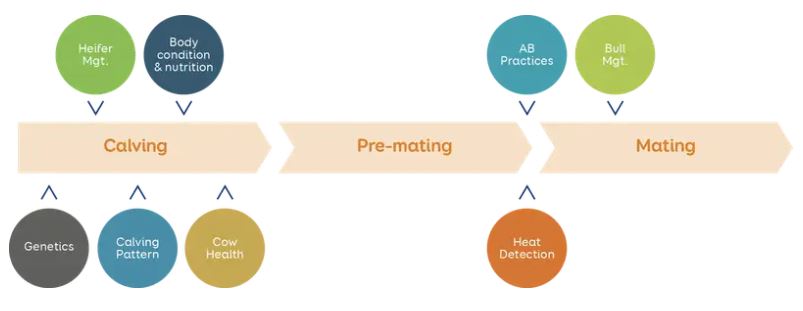
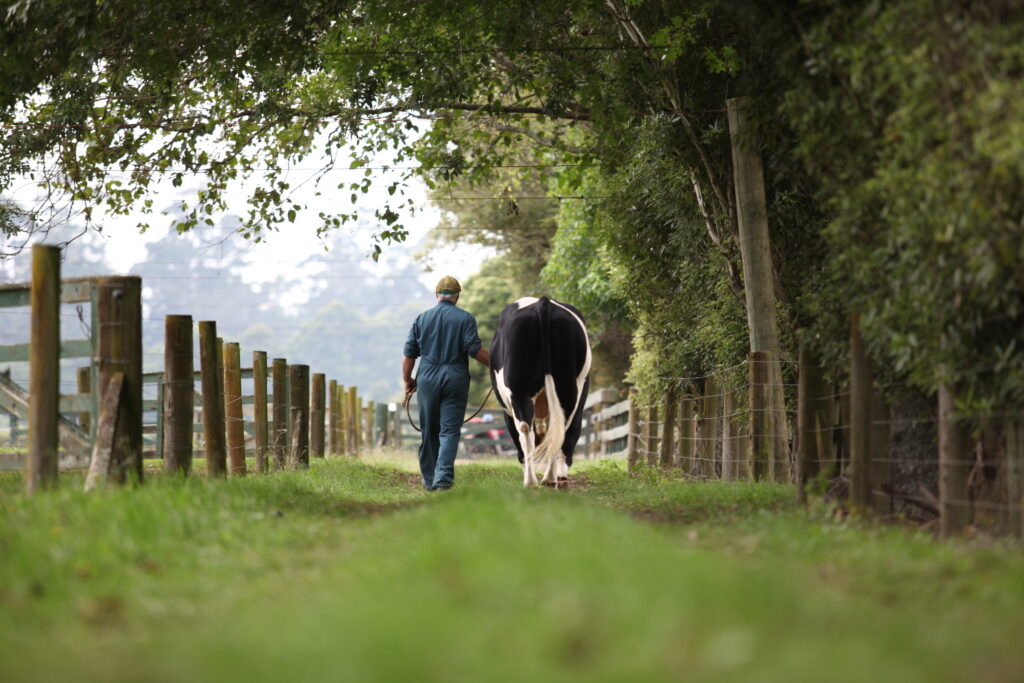
Getting the herd back in calf quickly is like baking a ‘fertility cake’, with the eight key ingredients listed below contributing to the mix at the right time throughout the year.
1 - GENETICS
High-gBW bull teams, mated to the right cows, breed high-yielding, emissions-efficient replacements
2 -HEIFER MANAGEMENT
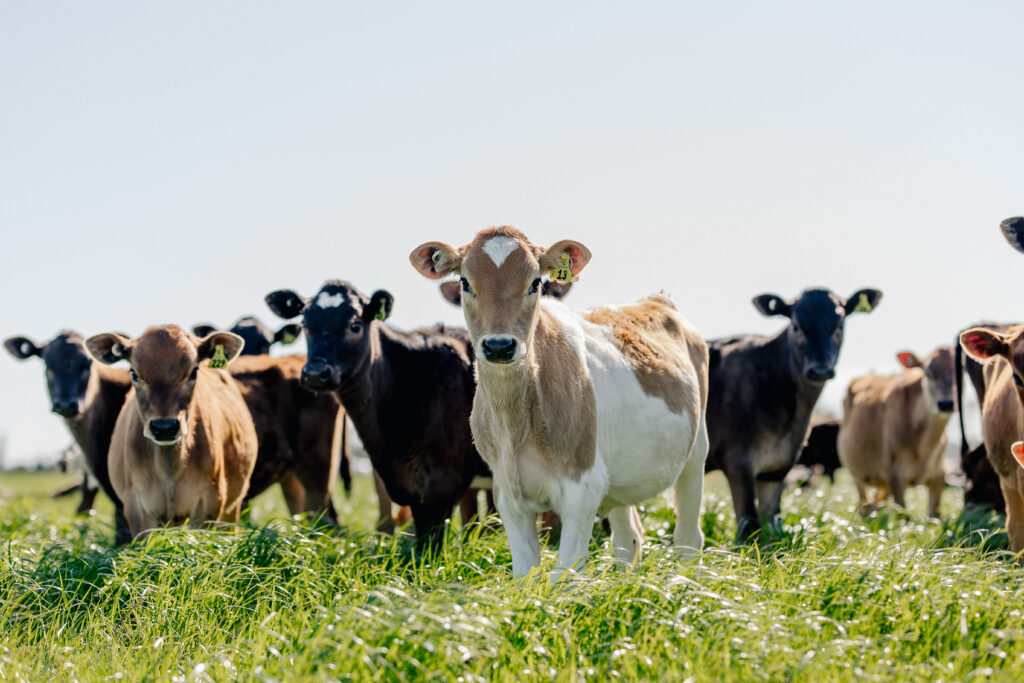
Heifers that achieve liveweight targets at 15 months will get in-calf and calve faster. Those that achieve targets at 22 months of age are more likely to resume cycling early and conceive quickly as first calvers.
3 - CALVING PATTERN
Strive for at least 88% of your cows to calve within the first six weeks of the calving season. This creates more days in milk and more time for cows to recover before mating.
4 - BODY CONDITION & NUTRITION
Mature cows should reach a body condition score (BCS) of 5.0 (NZ BCS score) at calving, while first- and second-calvers should aim for a BCS of 5.5. For mating, the target is for cows to lose less than 1 BCS from calving to mating (at mating, 4.5 BCS for first and second calvers, and 4.0 for mixed aged cows).
5 - COW HEALTH
Healthy cows are more likely to perform well productively and reproductively, need fewer interventions and health treatments, and remain in the herd for longer.
6 - HEAT DETECTION
To achieve strong conception rates, aim for 95% of early-calved mature cows to be inseminated within the first three weeks of mating, with short returns kept below 13%.
7 - ARTIFICIAL BREEDING (AB) PRACTICES
Proper insemination techniques and semen handling are critical for maximising conception rates. We carefully monitor the reproductive performance of our genetics products and technicians.
8 - BULL MANAGMENT
Provide one bull per 25 heifers plus a spare, and two teams of one bull per 30 non-pregnant cows plus spares for the milking herd. All bulls should undergo health and fertility testing before use.
The outcome of good reproduction
More profit.
More heifers from artificial insemination.
More days in milk.
More voluntary culls.
Click the links below to read how you can advance herd improvement on your farm.

Herd improvement overview
The efficiency and profitability of New Zealand dairy cows has continuously improved over the years.

2. The cows you keep
Not all cows are created equal. The best cows are more efficient at turning feed into milk.

3. The calves you rear
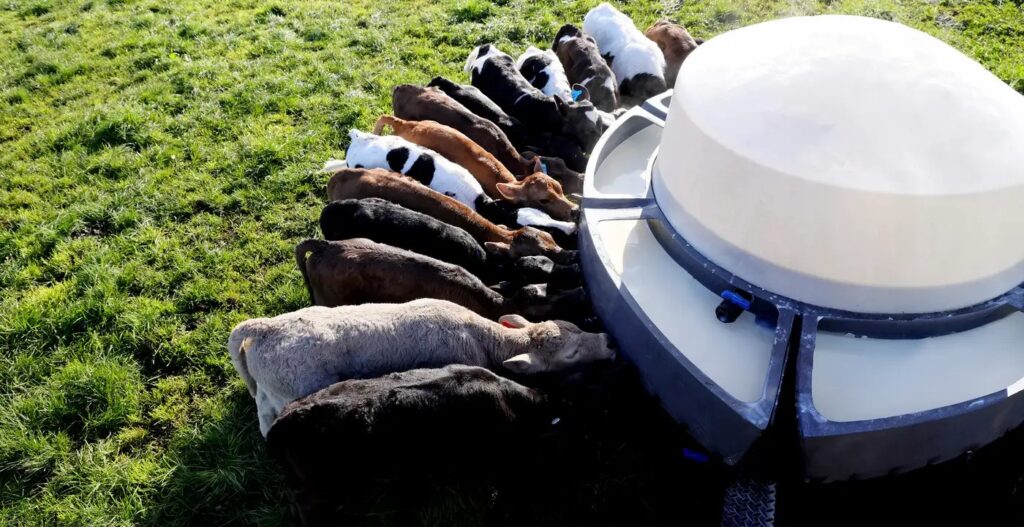
Increase the rate of genetic gain by retaining your highest quality heifer calves to rear as replacements.

4. The bulls you use
The most advancements in genetic gain are generated from sire decisions.